Building an AI agent: Beyond data prep and analytics

  • Alteryx
Building an AI agent: Beyond data prep and analytics

Webinar

AI agents are only as reliable as the data and business logic behind them. But how do you move from traditional data preparation to building AI agents that can deliver trusted insights and automate complex workflows?

Join Alteryx for a live demo exploring how to build AI agents using Alteryx One, an AI and analytics platform. See how to turn natural-language prompts into visual workflows, uncover insights with AI-powered analytics, and build conversational AI agents while maintaining data governance, transparency, and human oversight. Discover what it takes to move from experimenting with AI to putting it to work across your organization.

What You'll Learn

  1. How to build AI agents that go beyond traditional data preparation and analytics.
  2. How to turn natural-language prompts into automated workflows and actionable insights.
  3. How to connect AI agents to live data sources and integrate them into your existing tools.
  4. How to build trustworthy AI agents with data governance, transparency, and human oversight.

Speakers

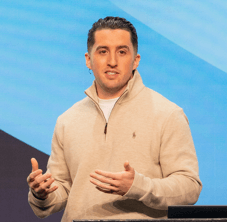
  1. Mackenzie Putici Webinar Moderator Future B2B
  2. Joseph Marco Principle Solutions Engineer Alteryx
Full Transcript Mackenzie Putici Hello, everyone, and welcome to today's webinar, building an AI agent beyond data prep and analytics. Today's session is sponsored by Alteryx and produced by Smartbrief, a future b two b company. My name is Mackenzie Pudice with future b two b, and I'm excited to be your host for today's conversation today. Now agents are fast, determined, and frankly, really impressive. However, AI agents are only as reliable as the data and business logic behind them. So how do you move from traditional data preparation to building AI agents that can deliver trusted insights and automate complex workflows? Well, today, we're gonna get into that with Alteryx. We'll be privy to a live demo exploring how to build AI agents using Alteryx Alteryx One, an AI and analytics platform through natural language prompts, all while maintaining data governance, transparency, and human oversight. So you'll leave knowing what it takes to move from experimenting with AI to putting it to work across your organization. As you can tell, this is gonna be a super valuable conversation, and I'm excited to get started. So let's just cover a little bit of housekeeping to make sure you all get the most out of today's session, and then we'll get our speaker up here on stage. So first things first, introductions are always lovely. I've seen a lot of you saying some highs, hellos in the chat tab, but if you're just joining us, just getting settled, if you look to the right hand side of your audience console, you'll see there a chat tab with a few tabs at the top, chat, docs, q and a. So we're gonna quickly go through those. And I invite you now to say a quick hi, hello, hola, bonjour, whatever greeting you'd like, throw that in the chat. Let us know where you're tuning in from. Send some energy around here on today's session. Looks like we've got Greg in from Idaho. We've got Jorge from Texas. Landis is tuning in from Bethlehem. We've got California in the house, Puerto Rico. We've got Illinois, Cleveland, Florida. Awesome. So keep those highs and lows coming in. Detroit. Hey there, Martin. Welcome. Welcome. The chat tab is also the perfect place to let us know if you have any interesting thoughts, insights, feedback throughout this conversation today. So chime in in the chat. We'll do our best to keep our eyes on that. Now if you have any technical issues, this is also the perfect place to let us know. Hopefully, that's not the case. And also a quick browser refresh usually does help with any issues with slides, video, audio not loading, not syncing up. So try that as a first line of defense. But if you're having persistent issues, reach out in the chat. Myself and Deanna who's our webinar coordinator here running things smoothly in the background will be here to help. A couple other things you can consider to enhance your viewing experience, if if you hover over your viewport, you'll see a closed captions button. You can put that on in several different languages. If you're on a mobile device today, there's also a light mode you can toggle on that helps pair down the console, so great on a small screen or maybe limited bandwidth as well. And third and finally, there is a new feature called catch up. So you'll see a little catch up button with a round arrow. If you get interrupted, you get a call, someone steps in, you get a package delivered, whatever it may be, hit that catch up button when you come back and it'll give you a quick summary of the last ten minutes. Alright. Aside from that, we are gonna hold some time for q and a today, so please put those questions not in the chat, but rather in the q and a tab. And then in the docs tab, you'll find a few great follow ups. You actually will have slide deck from this presentation you're about to, see and sit in on. So if you wanna grab those and download them, you can. They're in a PDF. There's also a link to the Alteryx in action series. And what that is is basically a live demo series both for people who want to see what Alteryx can actually do, and there's some upcoming dates, live dates you can sign up for. So if you wanna check that out, check the link and, go from there. And with that, last bit of fun to mention is we have a $250 Amazon gift card up for grabs. We're gonna draw that at the end of today's session. You do need to be live and present on this webinar to qualify for the prize. You must also meet the price terms and conditions linked in the docs tab. Aside from that, I think we've covered it all, folks. So if we forgot anything, if you have any lingering questions, just throw them in the chat. Otherwise, please help me in giving a warm welcome to Joe Marco. He's the principal solutions engineer over at Alteryx, and he'll be joined for q and a, by Jessica Turesko, who is from Alteryx marketing team. So reminder, put those questions in throughout, and we'll do our best to answer as many as possible with the time allotted. And with that, over to you, Joe. Take it away. Video Meet everybody. My name is Joe Marco, principal sales engineer at Alteryx. I've been here about five years now, but my journey with Alteryx started over a decade ago, which is crazy to think of. Time flies, I guess, when you're having fun. A lot of what we wanted to make sure that we address today, and I… I've had little snippets of these kind of conversations and videos, is around reinventing not only the way that you work, but how you approach your Alteryx, the Alteryx capability. So I'm gonna bucket these… This conversation a bit into… There is gonna be, I assume, newer users, people who have never used Alteryx on this, webinar, but I imagine there will be existing or long time expert users as well. So some of the things I wanted to emphasize when you think about what is Alteryx one, and this is one question I love to ask customers when I'm talking talking to them. If you tell me what you've heard of Alteryx one, what do you think it is? And and you get varying questions or or varying questions and or responses. Sometimes it's, oh, Alteryx one is the the cloud cape… The cloud products that Alteryx has. Sometimes it's Alteryx one is… It's the designer thing that, you can use in the browser. What I wanna emphasize for the group here, for anybody who is an existing Alteryx user, is that Alteryx one is the evolution of all of the different capabilities we've had in Alteryx for quite some time. I started my journey, maybe like any existing users on the call with Designer Desktop. Eventually, I matured into Alteryx server. And, eventually, as… When I started to work here and over the past, you know, five to eight years, we've rolled out other capabilities that focus on enterprise governance, collaboration, and, obviously, in these… This day and error in this call, building agents, agentic strategies, and AI. If you forget any… All all slides, all content, this is always my go to slide, and we'll make sure that we share this. But when I say Alteryx one is the evolution of the platform, what I'm meaning, by that is it's still designer and server. And for anybody who's joining the call today saying, I really just wanna know how we create agents with Alteryx and what that looks like and how you wrap workflows into agentic processes. We're gonna do some live demos. I'll knock on wood that everything stays logged in, but if we have any hiccups along the way, it will be live. But just kind of emphasizing on this slide, if you are a new user, it's important to understand Alteryx gives you a multitude of different capabilities, modules, applications, products, whatever word you wanna use, that allow you to do many different things. Where the most common entry point is for customers traditionally in our existing customer base is coming in. They have data that's scattered. They use Excel or they use SQL servers and maybe a little bit of Python, and they're preparing and analyzing data, and then they're pushing that data somewhere. Or they're scheduling and automating that, process, that workflow with server. Everything else on this slide is kinda what I wanted to make sure we baked into our demo, which will lead to creation of agents. But the thing like… Things like connecting to live data, cloud data platforms you work with, Ask Alteryx is one of the most exciting things, so I'll make sure that I that I start our journey there. But this is the idea that just like most platforms and tooling you might work with today, we have our own Ask Alteryx that allows you… It helps you build workflows. It helps you, document things, automate things, and then ultimately wrapped in governance. If anybody does have follow ups on deep dive governance, lineage, permissioning, We'll save that for another webinar or you can reach out to me or, Jessica directly. But today, we are gonna be focused on… For existing users, kind of starting in that designer world and how that extends beyond that into the larger all search one platform. And for brand new users, the thing I like to emphasize here, especially in the era of AI, is you are still the expert of your business. You're the expert of your data. You know what you're trying to accomplish. And most importantly, you're the one who's gonna be able to specify, hey. AI interface, that answer isn't quite right. And if anybody has had some fun with any AI platforms today, many times it will give you an answer and almost persuade you that it's accurate and it's correct. And you come to realize as long as you know your system, your data, the things you're working through, you have the ability to tweak and monitor it. It's like, oh, thanks, Joe. You're right, actually. I did take a wrong calculation there. So today, we're gonna be focused more heavily on the right side of this Alteryx one canvas. But I will emphasize once more, Alteryx one, it is still designer and server baked into a larger platform. You do not need to move things around. You can still start the experiences where it makes sense, but opening a whole new world of possibilities. In this case, like building agents with Alteryx. The other larger announcement, when we talk about, you know, me being a ten year plus user of Alteryx, within the last two years, the major, major announcements we've made are consolidating all of these capabilities into one platform view. And also this year, at our customer conference Inspire and Bay, we launched what we refer to as the Alteryx one desktop app. So, again, the Alteryx one app is your unified entry point of accessing all parts of the platform. That's where we're we're gonna start our demo. Allows you to collaborate, share things, access things, and more importantly, it gives you a toolbox of different modules and capabilities that you can use at any given time. So you're gonna see some things that might not… If you are an existing user, you're gonna be… What's this Alteryx one app that looks different than designer? Designer is part of all… The Alteryx one app. And moving forward, the Alteryx one app will be your entry point into the platform. To have fun with these, and I've been doing this for a few years now. If anybody's been on any of my webinars or calls or, you know, just just have fun, I like to round my demos and just made up companies that I have. Usually, those are, like, sports related or in the case of Average Joe's Wine here, just kind of a made up wine company to kinda ground us in something maybe as closer we're familiar with. Obviously, take any of the things that I'm walking through and think about them for the office of finance, for tax, for audit. But today is… If we think about this larger Alteryx one platform and the the building of a… AI agents and Agentic strategies as they're evolving, How could we take this average Joe's wine company and look at growth opportunity around turning data into more actionable AI processes? So for today, I'll be the CEO, the lead of this average Joe's wine company. And what we're gonna explore together is, let's say that I've never used Alteryx before. And let's say I know I have data all over the place, and I'm trying to figure out how to run my business and make it more impactful and which products I should focus on, how to market them. Where do I start in Alteryx, and and what's that first entry point? Sometimes you'll hear us refer to this as, like, five minutes to well. There's many things I could refer to this as, but Ask Alteryx in the Alteryx one app will be what I would recommend as your initial entry point if you are a new user. This will lead you down a path to more AI and agent creation, but it is the perfect space to say, again, you know your business, you know your data, you're the expert in the process and the thing you're trying to accomplish. And what ask Alteryx allows you to do is, you know, gone are the days where you need to learn a new platform and you have to come into Alteryx and learn what every tool does and you wanna know… You gotta sit through a one hour training to know what's the tool palettes and how do I drag them in. With this Alteryx, you have a, you know, right hand, interface that allows you to understand, here's my idea, here's my use case, here's my data, help me get started, help me turn this into action. And we'll show this in the demo today, but this is one of the most exciting things that that I've seen launched, as part of our larger platform, and it's something I wish I had a decade ago, to be honest, when I was learning Alteryx and trying to remember which tools were where. The thing that maybe why many folks have joined today, especially if you're a new user, is what does agent creation look like in Alteryx? How do you create agents? In this case, we're gonna focus on conversational agents, but I will show you, you know, taking Alteryx assets and baking them into larger cloud code or codex related, agentic strategies. But in my case, how can I, as a business owner, turn some of my information, the data that I have that I know I trust, into conversational agents? So, yes, I can build dashboards and reports, but what if I just wanna ask questions or allow my employees and and my company to ask questions, and how can they trust those answers? Agent studio will give us a point of view around packaged agents that allow all users to conversate, get answers, understand where those answers are coming from, and obviously grounded in trusted assets. We'll cover the trusted aspect of this a bit a bit further. Live query. Yeah. So this Average Joe's company sounds great. You know, all you need right now is an idea, a hypothesis, a use case you're trying to accomplish, and you go to ask Alteryx, and then maybe you can create an agent at some point. But what if my data is a bit scattered? What if I also have a cloud data platform strategy? So my data is in Databricks or it's in Snowflake or it's in BigQuery. How can Alteryx help there? So with capabilities like LiveQuery in the Alteryx one platform, we have the ability to create and connect directly to your cloud data instances. So why is this advantageous from traditionally working with Alteryx? Think more tooling than NDB tools, more fluidity in terms of access and authentication. And most importantly, you're querying and analyzing data where it lives in your systems, and you're layering on Alteryx capabilities for ease of use, collaboration, and most importantly, and I've run into this as well. Right? If if you use or have a multi cloud data platform strategy where maybe you have Databricks but also Snowflake somewhere, and then maybe BigQuery is somewhere else, The idea that Alteryx is agnostic to these cloud data platform strategies and live query is one that we will show in the demo all of these, but just wanted to ground you in a lot of the things, that we're referring to. And it's hard to kinda pick my favorite. Ask Alteryx is up there. The the Alteryx skills is another incredible thing, and a lot of these just launched within, I would say, the last month. So if you're hearing this for the first time, you're likely not alone. But we have now packaged up Alteryx skills on our GitHub repository. So in this average Joe's made up wine company, let's say, hey. I get Alteryx. You know, maybe I traditionally just thought Alteryx was a low code on prem ETL prep and blend tool, but now I'm seeing there's other capabilities out there. But I have data engineers in my organization. They prefer to use Cloud Code or codex or ChatGPT or anti gravity. You know, you name it. Where does Alteryx fit? So with Alteryx skills and the Alteryx MCP server that we have allows us to open a whole new world of connecting Alteryx and Alteryx assets into these front end interfaces. So, again, I I wanted to bucket this combo and be considerate that if you are a new user and you are using one of these AI vendors, Codex, Claude Code, Gemini, anti gravity, that Alteryx MCP server and skills allows you to stay in the… What you're comfortable with, your entry point in these vendors, but take advantage of Alteryx assets. The biggest one, if you are an existing user, you can now with Alteryx skills and MCP server, you can create workflows directly from these interfaces. So you're leaning on trusted skills that we've open sourced and published and made available that you can go and grab, and you can describe what you're trying to do in a Claude code or a codex or an anti gravity in Google and get a workflow at the end. So two similar paths depending on your entry point. But if you think about the fluidity of where the market trends and the industry trends and our customer trends tend to be, and I have the fortune of working with many of our largest customers, there's usually pockets of different AI strategies in these organizations, and there's usually multiple exploratory, AI strategies happening at at a… At any given time. Where pairing things like your AI strategy with Alteryx come into play is, one, token reduction in cost. We'll save the cost, token reduction for another day. But creating reusable, we call them VERA, visible, understandable, repeatable, and auditable assets workflows that you can wrap into larger agentic systems. And with skills, you're still getting to the same endpoint eventually. You're creating workflows, but your entry point is no longer having to come into Alteryx, drag tools onto the canvas, figure out which tool is right for the job. You simply go into a cloud code or a codex, describe what you're trying to do, and skills will kind of optimize how it actually gives you the workflow in the end. So, I think Jessica and anybody who's worked with me will tell you I love to to blab. It's probably the the filly in me, but let's get to showing this. So, again, we're gonna do some live demos. We're we're gonna hope that I didn't, token out or log out with my two factor authentication, and then we will round at the end with a few examples because I think that'll be fun to see how we're actually turning some of these into live capabilities. So, again, I'm I'm Average Joe's, you know, leader. I have this company, this wine company that I have data all over the place. And what I'm really trying to do is figure out how do I grow my business, how do I make sure I'm staying relevant, which products are performing the best, all wrapped around this made up fictional company that we have the fun of, enjoying together today. So let's say I am brand new to Alteryx, and if you are existing user or an XP user, you can still take advantage of things like this. But for now, I'm gonna say, hey. First time ever seeing Alteryx. One thing that you are seeing here, what I have open, is the Alteryx one app. So one of the reasons that we kind of led down this path of just showing some slides of context, some users are used to just… I have designer desktop on my machine and when I need to publish and automate something, I publish it to server. The future of using Alteryx as an entry point is going to be navigating through the Alteryx one app, of which all the modules are available, but specifically, we'll start with designer and will lead to creating an AI agent together. So as an average Joe's leader, or maybe an analyst in this case, let's say I go into the Alteryx one platform. It's kind of the landing… Oh, sorry. The Alteryx one app and the platform interface. And let's say I simply want to describe what I'm trying to do. I'm a product analyst at Average Joe's Wine. I'm new to Alteryx. My leadership wants a clear view of product sales performance. Sales data is across a bunch of different files I have. Show me what's possible. Build me a foundational workflow that essentially helps me figure out where do I start with Alteryx. So if we think about traditionally what you had to do, what I had to do ten years ago was figure out the right tools for the job. How do I bring data into Alteryx? What do I need to drag in? How do I input connections? In this case, I'm simply saying, here's what I'm trying to accomplish as a user, and we talk about reimagining the way that you work. Now, ask, Ask Alteryx and the Alteryx one platform is saying, you know, user at average Joe's, I have a couple different options for you. But what I'm gonna recommend is, let's start too close to what you're familiar with or sorry, what maybe what the team is familiar with on the call or the webinar. Let's let's get you guided on Alteryx Designer. So it's going to prompt like, hey, here's where we wanna start. Do you want to move forward? So I'm gonna click approve. And what you will notice here is if if you caught that, Alteryx one, the Alteryx one app, opened designer for me. Again, designer is part of Alteryx one. It's not… It's it's part of the Alteryx one app. It opened designer for me. This is 26 dot two. So if it looks a little bit slightly different color wise, that… That's why. And on the right hand side, it essentially handed off, here is that thing that came from the Alteryx, one interface, the Alteryx one app. I understand what you're trying to accomplish, new analyst to Avarajos company and new to Alteryx. Here's a few opportunities for use cases we can explore together based off what you describe. Obviously, I can do all of these, but let's say product performance and revenue trends is where I'm most interested in moving forward. So it's saying, which one do you want me to help… To to help you build? So I'm gonna click product performance and revenue trend analysis workflow. So, again, I've never used Alteryx before. I just have this problem of my data is all scattered. My leadership is putting pressure on me to figure out which products are selling well, what our revenue trends look like, and I'm trying to figure out how to start. Ask Alteryx completely changes the way that you interact with Alteryx. It completely changes the speed at which even if you're an existing or an expert user, you can troubleshoot and optimize and find advantages. And I always like to joke around on these, demos, and hopefully you can see it on the screen, but, like, I put my hands up as this is going. This is logically understanding what I asked it to do. Right? I'm not touching anything, but this is live. And it's putting tools onto the canvas for me. And not only putting the tools there, but reconfiguring tools based off what it thinks I'm trying to accomplish with my use case. So in this case, it's kind of loading in dummy data because I kinda said, hey. I'm kinda new. I didn't bring my data in yet, but can you help me understand how I could approach building a performance and revenue trend analysis workflow? I could have been very more descriptive. This could have went a little longer. But once you get in the end, I'll kind of let that continue to churn out, for the sake of time. Here's an example that what it looks like maybe at some point where if I look at this, it added dummy data for now that I could swap with real data. Here's my product names, my made up wine, wine, that I'm selling, what I charge for it. Here's a little bit of data around the customers that have been buying my products. Here's their invoice information. And, ultimately, I have a foundational workflow. Eventually, if you're like me, you wanna you wanna clean this up. Right? So this is where your actual human in the loop. Right? You have a foundation. You're gonna wanna double check it has the right formulas. You're gonna wanna swap for your real data. But you eventually get to the point… And I'm gonna hide this work. I'll hide the… Ask Alteryx for now. You get to a point where you can really polish up a workflow. And when we talk about Viora, what I what I mean by this is you're you're attempting to describe a a problem that you're trying to solve. In my case, I have some leadership pressure. They wanna know sales totals and trends, and my data's all over, and I kind of do this in Excel and SQL and Python today. With this Vira concept, we have now a workflow that's a livable, visible, understandable, repeatable asset where, obviously, I clean this up a bit for anybody. But you can see here if I zoom in a bit where I have a workflow that essentially, going back and forth with Ask Alteryx, can scrape information from documents potentially. So these are my made up invoices for my made up company. It can pull that data out of, you know, imagery or invoice files. It can lean on Ask Alteryx and other AI platforms, and we have many out of the box connectors in AI to essentially allow me to also build prompts directly in workflows. So we're not necessarily… We haven't created an agent yet, but we're creating a process that's more agentic in nature where describe a problem, get an answer. But the traditional issue with, you know, using AI platforms, describe a problem, get an answer. How much can you trust it? Can you defend the answer it gave you? More importantly, can you run it the same exact way the next time? So if I said next quarter, I need to go back to my leadership and tell them exactly what the revenue trends are again. And the last time, if I just loaded a bunch of data and was using a, you know, a ChatGPT or a Claude or a Gemini, and I got an answer, but I didn't have something that I knew how exactly did the data change, how exactly did the formulas get applied, and, ultimately, how did I end up with that trusted output? This is where the concept of your and workflows as an element of, you know, preparing your data for AI come into play. So all we've done so far is… Okay. I was a brand new user. I came into ASK Alteryx. Describe what I'm trying to do. It kicked off a generalized sample workflow for me. I went back and forth with it a bit and kinda got it to a state where I felt more familiar. And then, essentially, I just kind of reorganized and cleaned some things up. And, ultimately, I now have… If you can see here, I at least have… Okay. Here's some central data that I'm working with for some recent invoices. So, those made up invoice files, which look like this over here. I have, you know, three invoices that are recent. They're for these three customers, and here's what they bought and a bunch of data that I can immediately now use. And, obviously, in reality, you'd have way more than three records, but for the sake of demos, you have data now that you can take across the platform. And more importantly, you have a workflow that you can tie into agents and agentic systems. So we're gonna pivot right now, like I mentioned on, the slides earlier. We kind of… I wanted to make sure I appeal to the mixture of personas on the call, and I would love to… If you're in the chat, let us know. Are are you an existing user? Are you a brand new user to Alteryx? Maybe if you are existing, how many years? Let me know if you have me be on ten plus years of using Alteryx. But, generally, we started close to home. We started in… Okay. The Alteryx one app, it still includes designer. It will. Designer is a core component to the future of Alteryx, but Alteryx one is not separate from designer. Alteryx one is the platform. Designer is a component of it. We essentially entered in through Ask Alteryx. We got a recommendation of we understand the use case you're trying to solve for, analyst that average shows one. Let's open and build you a workflow. And now we have a workflow that is repeatable. I can come back to it. When I have new data, I can come and rerun it. When I wanna change a formula or, hey, I added a new product line, a new wine type, I can come back and and alter and update this. And the beauty of that is I'm not just throwing it into, you know, some AI interface and hoping it's making sense. I know again exactly how my data is flowing. I know how it's changing. I can see the before and after as it goes through every tool, and that is really where that… That's it. This viewer concept comes into play. Brings us to the topic of where we are today with the topic on hand of agents and AI agent creation and agent orchestration. This can mean many different things to different folks. So we're gonna show… What do I do if I have now… Again, if it wasn't me talking, it probably would have been five minutes, but describe a a use case, get a foundational workflow built for me. Yes. I'll fine tune and double check all the calculations look right. But now I have data that I trust to work with. How do I create an agent on top of that trusted data and these trusted workflows? So we're gonna slightly pivot away from designer and go into other parts of the platform. So I'm gonna minimize designer. And, again, we are back in the Alteryx one interface, left hand side… Alteryx one app interface. Left hand side, you'll see we have designer and then a bunch of other capabilities and modules. One capability, in case anybody did not know, is… That we have is called auto insights. So the idea that you can take your outputs and automatically look at trend analysis, can look at anomaly detection. So, essentially, I have the ability to generate, obviously, this image I prebaked, but I have the ability to just plug in my outputs of my workflows, this trusted data that I have now created, and I can look at sales trend analysis. And you can see here a lot of these visuals there, we call this auto insights intentionally, auto insights, automated insights, but it's natural language. It's some prebaked graphics. And, ultimately, this is giving you some level of reporting and trend analysis that easily just extends from the designer experience. When it comes to agent creation, what we're gonna focus on as a stepping stone into a more robust agent strategy is agents in Alteryx can be created very easily even if you've never built an agent before. And we're gonna focus on conversational agents today. What do I mean by that? Structuring an agent that you want to ask questions to, and it gives you answers. It explains how it got those answers, and most importantly, that you can trust the answers you're getting. So I've created a few agents, but in this case, let's say, again, Average Joe's company. I want to look at a revenue and margin optimization agent. I've already made this, but if I show you how I made it in Alteryx, it essentially looks very similar to probably other platforms you… You've used today. I give it a name. I give it a description. What is this agent's job? What should it do? What should it focus on? The the, custom instructions you see here, these will be critical to your business. Right? And here's how I want you to act, agent. I want you to focus on supply chain and review and revenue information. I want you to summarize these types of things first. Focus on these areas and focus on certain components of my business. The most important thing for you to remember is the beauty of agent creation in Alteryx is you can specify and update and refresh very, fine tuned data, datasets or workflows that feed this agent. So, usually, the questions we get at this is, like, couldn't I just go into chat b… Chat GPT, load a bunch of data that I have, describe the… What the agent is or the custom GPT I'm trying to create, and get an answer. And the answer is you can absolutely do that. What you are gonna struggle with is the next time you have new data and you wanna rerun that, you need to find it, you need to remember it, and you need to change all of your settings. You need to kind of refresh it and you revamp that automation. So this bureau framework is, hey. This agent, this conversational agent in Alteryx, and as you can see, even if you've never used Alteryx, I'm sure you can… Hopefully, you can feel like, oh, I can create that. Right? To give it a name, give it a description, explain what the agent is supposed to do, and give it very specific trusted datasets that came… Or workflows that came from the Alteryx platform. So in this case, I have some starter prompts, but what this agent actually looks like, in action is we'll go to agent studio. And, again, I am average Joe's, and I'm still that same analyst who is trying to figure out how do I get a read on explaining to my executive team what the overarching, revenue and sales trend analysis totals look like for our company. So this one that I have here, I've named, revenue agent optimization. Again, just kinda gave it a a straightforward name, and we have some live demos, some bouncing around. Apologies. But what if I now said, give me an executive summary of my top three performing products for average Joe's and any recommendations you may make to try to drive more growth for my business and increase customer satisfaction. It's always fun in these live demos typing. It's pretty good. Not too many typos. So now what this is doing, right, it's going through the instructions that what I've set up. And most importantly, it is going against those trusted datasets and the workflows that I've anchored it in. Viora. Right? Visible, understandable, repeatable assets that if something changes and I need this agent to change later, I can go back to the workflow. I can go use Ask Alteryx. I can change the formulas. I can add, and, while this is, kinda crunching away, let's say I needed to go back and said, you know what? Actually, we're missing, some of our invoices there. Let me bring in those new invoices that we had, pair them, marry them to the workflow, and then the outputs again, I can refresh and automate. So, the reason this becomes advantageous is you have a living asset, a workflow that you can rally around, you can explain, you can look at how data entered, how you input your data, what formulas you applied, how you filter things, and you know how you got to your output. You can defend it, you can audit it, you can screenshot it, however you need to justify how you got your answers. In this case, I asked this question, tell me the top three performing products. And as you see here, here's your top three performing products analyst at Joe's company. You have Chardonnay, your Riesling, and your Pinot Grigio. Here's some other insights that you might not have known. The Los Angeles store within your dataset is, your primary contributing, factor for sale. So whatever this Los Angeles store is doing, I wanna figure out how they're selling so much, and and maybe that's an opportunity to explore. If we look at recommendations, right, drive profitability with certain products, optimize seller margins for certain, you know, for certain types of products, replicate store success, kind of like I alluded to. I'm glad it reaffirmed my thinking, and then enhance the checkout experience. So in the data itself, I also had how the customers paid, credit, debit, and you would have saw this by slightly go back. In our… You know, we didn't need to create this, but I did just for the sake of this session. If you would have looked at how customers tend to pay in the data that we've extracted and would have leveraged, we have their payment present. Do they pay with Apple Pay, debit card, credit card? You'll notice it's giving me a recommendation. Two thirds of the customers are using credit cards, so ensure your, point of sale systems are optimized for a quick checkout. It's kinda common. Right? But if you imagine your world, your use case, not Joe's made up company, You have a whole, new set of capabilities with Alteryx one that extend for existing users, the prep and blend that you're used to, but open a whole new world of agent creation and agentic systems. So this is what I would refer to as… We kind of just did it together. And if I gave you Alteryx one today, I guarantee you within an hour, you could create your first Alteryx agent. And I'd actually encourage, like, if anybody is interested or, please feel free in the chat, like, agents you're either creating today or agents that you were thinking about how Alteryx could work with agents. We'd love to hear that. But I would encourage as an action, like, getting access to this, going through a trial, reaching out to your account teams, like, creating an agent the way that we just structured here. You could do it in a in a snap of an instant. What I'm gonna shift into next is a much larger… For anybody who might be, like, an AI engineer on the call or more advanced than the AI systems and agentic processes, We're gonna slightly pivot away, still in the platform, but to some other things that you can think about around how the Alteryx one MCP server. And if you saw that… Let me just go to the MCP server details. I think it'll be right here. Reload this. I'm gonna close a few things. And and maybe before I go to, where we left off, so let me just go back to our our slides. So we kind of write, this… I'll pop this slide up again because it'll be helpful for the team to see. So whether I'm a new user or an existing user, the future of leveraging and using the platform, the entry point is Ask Alteryx. It opens up so many doors of guiding you, reducing time, saving you a lot of headaches around troubleshooting. And it's funny, we have a lot of customers who… Sometimes they'll build workflows and then they'll go to Microsoft Copilot or something. Oh, hey. I have this error. Help me fix it. And then it'll give Alteryx instructions back. So ask Alteryx as your entry point. We talked a little bit about extending and creating a conversational agent in agent studio. The one thing I mentioned is maybe a different person that this individual at AverageJoe has worked with actually has data in Databricks. What might that look like in the Alteryx one platform? So this is where live query comes into play. Run real time queries against your trusted, data platforms. So in this case, let's say my customer review data was stored in Databricks. So my invoice data was kinda scattered. It's in documents and systems, and I have files and analysts chasing it down with vendors. But let's say my customer feedback data is in Databricks. I've centralized it there. What does it look like using Alteryx with Databricks? This kinda better together story. What LiveQuery allows you to do is allows you to connect to your systems, and, again, it's gonna look very similar but slightly different, you know, depending on if you've ever used Alteryx. I've connected to my Databricks system. I am looking at my customer information. I am looking at a little bit of the stores, maybe where those customers purchase things. And I've had this prebuilt workflow just for the sake of time. What you can do is, obviously, you can prep and clean and join your data together, give you a really structured… Now I have all my customer information, and I have the reviews that they provided. But if you notice on the left hand side here, when we say Alteryx with Databricks, Alteryx on Databricks, whatever the right framing here is, you have flexibility that we support multiple cloud data platforms, Databricks, Snowflake, BigQuery. But in this case, I, again, I am just like, hey. I'm trying to figure out… I have this customer review data, and I'm trying to make sense of it. Oh, by the way, I ship my my product all over the globe. So what do I do when the customer reviews are are are in different languages? And how do I optimize and use Alteryx to help me make sense of, you know, the customer information? Because ultimately, I wanna know not only how my company is doing and how we're… How the revenue is going, but what the customers think. Are they satisfied? So what you have in Alteryx with Databricks are what we call AI functions that allow you to leverage Databricks oriented AI models to actually just drag and drop and set them up. So in this case, I'm gonna zoom in on one. I've connected the data in Databricks. I am pushing it into… Here is my source data. You can see here, Alex, Reese, Blake, Riley, thank you. You've made up customers for buying my product. And you'll notice in here I have some reviews. And these reviews are in different languages as you can obviously see. I can lean on AI functions in Databricks with Alteryx to essentially say, what do I wanna do? I wanna translate a specific field, the review field to… I'm just picking English, but you pick your language. That makes sense. And I want that to output. What I get out now on the right hand side of this tool… And, again, we talked about visible, understandable, repeatable, auditable. You can see your data as it goes into things. You can look at it as it comes out. What you will see happen here now is it's actually running Databricks' intelligence, translation agent within a workflow, and it's giving you… Here's that translated information, Joe. And and, hopefully, if anybody anybody speaks any other languages, you can double check it did a decent job. But, right, here's the source review, and here's an output. Very good for dinner. If I scroll down, here's some other, languages that are input, and here's some outputs. So LiveQuery, it opens up a whole new world of how you work with systems when you're working with cloud data platforms. It gives you advantage where you can have many different folks understand a workflow. Right? They don't need to understand code. And obviously, if you do prefer code and SQL, you can build encode and alteryx workflows on top of Databricks and Snowflake, should you choose. But the beauty of these become you can open up opportunity to the general user who… I just gotta get a report out to my leadership around how the customer review data is going, can quickly build a workflow. And, obviously, ask Alteryx. I mentioned if you take nothing away from some of the exciting things, ask Alteryx being our best friend here. So, if I say something like, tell me the value of this workflow, this is in this is in LiveQuery, So I can explain it to my leadership. So I always love the idea of using SQL turks for value justification because it's one of the things I used to struggle with was you you would build all these ad hoc workflows and these processes all the time, but then you would need to figure out how do you actually quantify the value. Right? Like, if you never did it before, maybe it's time savings, maybe it's dollar savings. In this case, it's saying what you have here, user, here's an executive summary of what this is doing. It's using AI powered sentiment. It's giving you a global reach at your customers. It's eliminating manual prep. It's giving you better integrity and governance, and it's essentially giving me something that I can wrap into a a presentation or a story for my leadership. So we've covered now LiveQuery, Ask Alteryx, and agent creation. The… For any more advanced, AI engineers or cloud code developers, codecs, I'm gonna pivot there now, because there's some very, very exciting things there. And I guess for anybody, just to kinda get your attention again, anybody who today is using Cloud Code, Versus Code with GitHub Copilot, codecs and ChatGPT, anti gravity, some kind of AI interface. You're creating agents. You're using these as your entry point your day to day, and I use them outside of work too, for a variety of things. What does it look like with Alteryx, specifically, in the future of using these AI platforms as your entry point? So maybe there are segments of, teams in in average Joe's company that are all advanced data engineers and, they're building data pipelines and they're using cloud code to optimize things. With Alteryx skills and the MCP server, we're opening up a whole new set, and I mentioned earlier, Alteryx skills are available today. You can go right right to here, even right after this call if you wanted. What Alteryx skills open an opportunity for you to do is you can maybe now come into Cloud Code, and you can essentially say, there's some skills that I've packaged up, and these skills are gonna optimize, and I'll just show you a few of them. I already set this up again for the sake of time. So if I say Alteryx, here are Alteryx skills that are optimized and, hopefully… Maybe I zoom in a little. Can't zoom in. Hopefully, you can read that. It says inspect, build, edit, run, repair, validate Alteryx workflows, macros, things of this nature. So it's giving you the opportunity to create things. I I went ahead and created one for the sake of this… Today's demo. And if you see here, here's where I started. Hey, Alteryx Skills. I'm a developer for Average Joe's wine. Here's my objective. I'm trying to build a workflow to analyze wholesale distribution and essentially look at inventory and distribution health. It goes through the skills. It's optimizing what's there. I'm going back and forth with it and explaining what I want and how I wanna clarify things. And at the very end, I essentially get a workflow, and I think I have it right here. Let me just, actually… The very end, I would have gotten a, you know, a package workflow that I can click a button and open, but it's stored it on my machine here in this case. So what I… What it looks like, if I go back to designer, this is a designer workflow in this case. This is a fully generated from a prompt once it loads here, Claude generated workflow. I did nothing other than describe what I was trying to do and let Claude code with Alteryx skills take the wheel, so to speak. Obviously, a little back and forth if it asks questions. What I wanna show and emphasize here is what you're doing now is you're you're opening a whole new world of Alteryx opportunity to users who haven't inherently used Alteryx. So they can still… These advanced developers can still define what we're trying to do, and they can now work with business users to validate assumptions. So it's reading in customer sales transaction data. It's doing a bunch of things, but everything you see here, containers, the only thing I added was the banner at the top. Containers, the tool descriptions, the the order in the summary, if you notice here, it also taps into maps. So it ran me a geographical, presentation of where my store and distribution centers are, and it's giving me some information there on how I can optimize, you know, sending to to customers. So I'm super excited about, like, Alteryx skills, especially for users. If you live and your day to day is in a cloud code, a codex, one of these AI interfaces, or you just choose to, you you see a trend there. The idea that you can lean on skills and optimizations to create assets for you that, again, visible, understandable, repeatable, auditable. When it comes to MCP server, if we go back to… And I think, just time check, and I think we're still okay on time. So if we if we come back to, MCP server as well… So, again, I kinda always come back to the slide. We've covered skills. We've covered agent studio. We've slightly covered AI tools. We've covered ASK Alteryx. Things that are in Alteryx one that extend the value and… For existing users of designer and server. And if you're brand new to Alteryx, I really hope you can see the art of know your use case, know roughly where your data is or be an expert in your data. And if you are working with data, then you are, obviously. Describe what you're trying to accomplish, and let Alteryx one take some of the mundane, tedious, gotta sit through a training and learn this tool and how to configure it. Take some of that out of your hands. When it comes to MCP server, how do I wrap into an agentic system the opportunity of using Alteryx's MCP server across the Alteryx one platform. So just in the sake of variability, rather than showing Claude or Claude code again, let's say I go over to… Could be codex, but I'm gonna just pick check… Pick on ChatGPT for now. So in chat g p t, I won't go through. We have some great documentation very easy, but you can set up a connection to your Alteryx one MCP server. Your MCP server is essentially… Can build, discover, run, and manage Alteryx one assets from your Alteryx one instance. So in this case, I could say something very generally, like, maybe I was a leader looking across my engineering teams and I wanted to know even for the users who are building and ask Alteryx and designer, but also these cloud code engineers who are building things, tell me what workflows you have access to. So what this is going to do now, it's gonna essentially use our MCP server as that entry channel point into our Alteryx one environment to look at all the workflows that I have… That it has exposed or have access to as endpoints. So you can see here, I have a a bunch of them. If I said something like… And you could kinda see it's already set. Which ones are average Joe's related? And which one is best for customer review analysis? So you're kind of, reimagining, right, like, exploratory opportunity. And if you are a a larger user of of Alteryx or if you even are a new user, eventually, assets build up. For me, I started with one workflow and pretty quickly within a couple months, I had dozens and hundreds of workflows. So now you're using the MCP server to traverse what's possible. I could execute a workflow from here. And more importantly, if you've never built agents in ChatGPT, what if I built an agent in ChatGPT, for example, or cloud code? And this is just a, hypothetical one, but I wanna build an agent that essentially helps me with a workflow explorer opportunity. So I wanna find the best workflow across my multitude of hopefully workflows that I ever shows that'll help me run a specific process. So I've created this. If I actually edit the agent, you'll essentially see all I really connected to. I gave it some instructions. I connect to the Alteryx one MCP server. So slightly different from earlier when we talked about creating an agent, a conversational agent in Alteryx. Here, I'm using whatever AI platform you have, Cloud Code, codecs, anti gravity, Gemini. You're creating an agent, and maybe I'm saying, you know, I wanna compare the best average dose workflow for this goal. Identify customer sentiment. What's it gonna do? It's going to go through the MCP server. It's gonna look at all the, workflows and assets in all search one that I've exposed, datasets, assets, workflows, and it's now gonna optimize. This person just wants to know, I need to identify a way to run customer sentiment. Maybe I never even need to use Alteryx or I've never used it before. I just wanna know how do I execute a customer sentiment output and leverage it. What this will eventually do and if it's slow to respond, as you can see, and, again, this is chat t p t, not Alteryx, but I think I have one of these already pre canned, which I do. Eventually, you get to a world where you can… I'm just gonna scroll up. We're just going back and forth here. It would have given me something like this. Here's the best match. You have these workflows in your system. Here's the fit. Here's the inputs that you may need or that will clarify. Here's a result, and here's, you know, any risk of running these. Baking these into your larger agentic systems, this becomes a world where you actually don't even need to, open Alteryx to create workflows anymore. You don't need to open Alteryx to actually run and execute your Agenstic systems anymore. However, you're always grounded in that verifiable, visible, understandable workflow, whether it was a live query workflow, whether it was a desktop workflow. So you can defend as a user how your data changed, how you traversed it, what transformations you applied. So we kinda moved pretty quickly. I'm sure there's some questions in the chat, and I know, Jessica will get to them. I just wanted to round this out with, like, what does this look like in reality? Like, it's great conceptually. An average Joe's demo is kind of fun. Right? Hopefully, you had fun at least with me on my made up company. But what does it look like in practice? So I want to share some real examples we've we've, done internally here that maybe you can think about in your organization when you bring all these things together. So, Wes Wes Cannon, shout out to Wes. He's a manager in our sales engineering space. I've I've worked with Wes for a number of years. Using a multitude of these different Alteryx one capabilities, he has created an automated sales process that essentially notifies go to market technical sellers on where opportunities are slipping up due to, missing, inputs. Right? Not updating notes in time, not following up with a customer at a time. And And if you'll notice here, if I draw your attention to this bottom left, Wes used a mixture of Alteryx skills with the MCP server to actually create a custom connector. So using the Alteryx, SDK and a mixture of things, leaning on codecs, you can use cloud code to actually build not only a workflow, but a custom tool within a workflow that actually executes and publishes to Slack. So now I actually get these emails, every week or every every two weeks. I am a presales solutions engineer. Right? So I get a notification. Hey. Here's your top deals. Here's the ones that need another touch. I need a follow-up. Here's the the items that we're missing, you know, in a better documented use case. So this is active. It's live. And shout out to Wes. It's a great way at showing, like, what's possible when you view Alteryx in this world of Alteryx one. Another one is Andrew Merrill. He had built very similar but slightly different. He built a Snowflake semantic view tool, and what he leveraged was codex, but it could have been called code or anti gravity. He essentially used a mixture of codex and our Python Alteryx SDK with Alteryx skills and built a custom tool with a custom icon that allows you to have a different way of connecting to Snowflake. So, again, all you really needed to do, bring an idea, lean on the AI systems that you have access to. And most importantly, Andrew as well as Wes is here. Under the hood here are workflows or tools that are optimized and openable and visible, auditable, repeatable. And last shout out I I promised I would make just because I I love what, the guys at at Bullion… Guys and girls at Bullion are doing. If you don't know Rowan and Owen, I would definitely recommend getting to know them. This is one of our partners. They publish some incredible things on their YouTube, especially exploring the new capabilities. It's funny, Rowan and and Owen, they… They've gone back and forth in one of our customer awards every year. So, love what these guys are doing. I wanted to make sure I plug their LinkedIn channels as well as their YouTube, to check out other ways to following up. And they are based out of the European region, I think, primarily. Would be interested to see if anybody here… If you also have your own YouTube videos that you've done with Alteryx or if you've ever considered, definitely let us know because we we love to check those out. And just for the sake of time, I think we're probably running low. Quick takeaways. Alteryx one is more than just the prep and blend that you're used to with ETL. Your existing Alteryx investments become building blocks for AI strategies. AI is only as valuable as the trusted trusted logic and the data preparation behind it. Natural language opens Alteryx to more people, more opportunity, more collaboration. And, ultimately, obviously, Alteryx can power Genetec processes beyond the Alteryx interface. So, I'm gonna check-in with Jessica. Maybe I went I went more… Longer than I had planned, but hopefully, we're still okay with time for questions. Yeah. Joe, thank you so much for that awesome demo, and thank you everybody for dropping in your questions in the chat. We really love seeing those. This was so great. Thanks again, Joe. I guess to start, I'll kick us off. What's the difference between Ask Alteryx and Agent Studio? So when would someone use one versus the other? Yeah. It's a great question. Ask Alteryx is gonna be the one that helps coach you, build for you, build with you, help you troubleshoot, document, your actual process for your use case. Where Agent Studio comes into play, it's gonna be the bolt on extension of what do you do once you have trusted data or trusted outputs that you want to make accessible, ask a question, get an answer, but most importantly, trust that answer and hope that it's not made up from AI. That's gonna be your biggest differentiation. So Agent Studio is gonna come into play within Agent Studio. It's obviously MCP, but the primary creation of agents is gonna be using the outputs of workflows that you probably prepared and used to ask Alteryx to help you build. Awesome. Thank you. I'm actually gonna display the next one. Let's see here. Okay. So this one's a good one. I think you mentioned, connecting to sources like Datapricks with live queries. So someone asked, how does governance hold up when the data isn't actually inside Alteryx? Yep. I love governance questions. We could probably spend another hour on all of them, but generally, there is major advantages that Alteryx one offers when it comes to governance and administration. So two of the keys, for the for the question, the admin console is gonna be one where you can look at audit logs of what users are doing within the platform and also if you're using MCP server, what they're doing as extensions of the platform. In the case of Databricks, we talked about earlier in our demo. Right? Databricks, the Databricks data I have didn't live in Databricks… Or sorry. Didn't live in Alteryx. It lived in Databricks, and I used Alteryx on top of it. In that example, Alteryx is inheriting Databricks Unity catalog governance rules and roles and permissions. So you're not changing anything from your normal structure. And these… The answer, I guess, is it depends on the question you're asking and where you're looking, but feeling confident that Alteryx One governance is night and day, difference from what I would say we've had years ago, which is exciting. Alright. Thanks. Let me publish this one as well. It see… So someone had a question from when you were showing the MCP server connecting Alteryx to tools like Cloud, Copilot, Gemini. So I think this one's a good one, which is, who is the ideal user for that? Is it more data engineers, or could an analyst use it too? It's a great question. So, I would say if you are a user who's looking to build processes more quickly and want to use a cloud or something else to build them, obviously, that would kind of appeal to the the the general analyst. Right? Go into cloud code, describe what you're trying to do, go back and forth or codex or in, you know, go… Gemini, get a workflow at the end. That's gonna appeal to the regular normal, you know, I'm trying to solve this use case. How do I start, and how do I get the thing at the end that I know how I can explain and change? Definitely MCP server and these more autonomous agents. You're… We're gonna be dealing with a specific type of persona and team there that's a little bit more advanced, I'd say, in the AI engineering world. So more data engineer oriented, more wrapping agentic processes into systems, But it is a mixture and it's intentionally… Obviously, you could still use MCP server like I showed as a general… Hey. What you have access to and what can you help me run? But the more larger agentic completely hands off reasoning, it's self learning, that'll be more for… Probably for a more advanced user. That makes sense. Thank you. I will do one more here. Let me display that. This one says, when you package something up as an Alteryx agent, what's happening behind the scenes to make sure it's giving trustworthy answers instead of just guessing? Great question. I don't wanna go too far if it doesn't pop up quick. But if you would have noticed when we did our agent shrouded… Agent studio demo, it had a, some reasoning logic that it was going through. And, yeah, I'll just I'll just talk to it. But when we created that agent, it's it's leaning on the trusted dataset that I hooked to it. But you would have saw there's, like, little drop downs I could have had. It's it's a full audit trail of exactly what it's doing and how it's doing it. So when we say trustworthy answers, it's packaging up, obviously, the instructions and the dataset that it's answering, but it's giving me a full audit trail of the exact things and steps it's taking. And, typically, that's where it gets a little challenging with AI platforms is, like I said earlier, they're incredible. You can ask a question, you can get an answer. But a lot of times, AI will try to persuade you it's right when you know it's not, especially if you're working with data that is scattered in multiple sources. So having verifiable audit trails within all search one, I think, is the the major differentiator there. Yeah. Yeah. That's great. Well, I think to wrap things up because we're close to time, for someone who's brand new to Alteryx watching today, Joe, what would you say is the one thing they should walk away wanting to try first? The new users has to be ASQualtrics. A a 100%, it's going to completely change the way that you just describe what you're trying to do and get a foundation created. For any expert or intermediate or advanced users, I still recommend to ask Alteryx. It'll help with documentation and a lot of troubleshooting, but definitely check out Alteryx skills. And if you're using these ad platforms in general in market, the vendors, go to our GitHub. I think I shared it earlier, but it's right on our GitHub. You can start to use them immediately. You don't need to wait, obviously to start to leverage. So those are the two I would pick on if I had to pick two. Awesome. Awesome. Well, I think that wraps it up for today. Joe, thank you so much for taking the time, to walk us through that fantastic demo, and thank you all for joining and taking the time to continue learning. We did drop in our resources center, the materials that Joe has shared as well as a link to all of our other upcoming Alteryx in action sessions and previous ones in case you missed them in the past. With that, I will wrap things up. Thanks so much, Joe. Awesome. Thank you all. Mackenzie Putici Alrighty. Thank you, Joe, and thank you, Jessica. That was great. I know we are a couple minutes overtime here, so thanks for everyone for hanging out and staying till the end here. Hopefully, you got a lot out of that. I know the demo, was great. You had a lot of questions. So I appreciate you all being, really active in the chat and the questions. That was great. So last couple of things we're gonna do here before we wrap up is launch a quick survey that's gonna pop up pop up in the chat docs q and a segment just from us here at Smart Brief. We're gonna give away our prize in about thirty seconds, and then we're gonna let you go. But I do wanna remind you, as Jessica mentioned, you do have the PowerPoint from today in the docs tab as well as that Alteryx in action series. So, don't sleep on those resources. Click in in there. Save those. Grab those. Bookmark them before we close out here right away. And with that, we have our prize winner to announce. So our lucky prize winner today is Jonathan Buford from Alabama. Jonathan, congrats. We are gonna reach out and, send you an email. That way you can claim your prize, and we'll let you know who can get that right away. With that huge round of thanks again to Alteryx, to Joe and to Jessica, and, of course, to all of you in the audience for being here, taking time with your schedules, being, active in the chat, active in the q and a. Hopefully, you learned a lot. Hopefully, this serves you, and you'll be able to take this and put it into action in your organization. If you wanna check out any other webinars, go to events.smartbrief.com. We have our full calendar there as well as the QR code up on your screen. If you wanna check that out, it is there. But until our next webinar here again, again together, everybody, I'm wishing you all an absolutely fantastic rest of your days. Take care.

Please provide citations & attributions for any information you generate from this content, thank you.